
Katie Galbraith
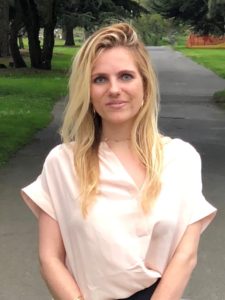 Katie is a T32 Postdoctoral Fellow at Columbia University Medical Center in the Department of Child Psychiatry. She was a graduate student in the Clinical Science Ph.D. program at USC. She received her B.S. in Psychology from Yale University in 2016. While at Yale she worked at both the Innovative Interactions Lab and the Program for Obesity, Weight, and Eating Research. After graduation, she began working at the Juvenile Justice Behavioral Health lab at the University of California, San Francisco. Katie is passionate about improving access to and outcomes of mental health treatment for at-risk and justice-involved adolescents and young adults. Her research interests include the evaluation of substance use interventions for at-risk and justice-involved youth, particularly with respect to the relationship between trauma exposure and substance use outcomes. She is also interested in studying gender-specific risk factors for involvement in the juvenile justice system. Katie is originally from the East Coast and is an avid Boston sports fan. Outside of work, she loves to travel and go to the beach. She is also slightly obsessed with bulldogs, particularly her family’s bulldogs named Spanky and Darla (pictures available upon request).
Representative papers
Galbraith, K., & Huey, S.J., Jr. (in press). Gender differences in intervention effects on delinquency for justice-involved youth: A preliminary meta-analysis. Journal of Experimental Criminology. VIEW
Galbraith, K., Tarbox, J., & Huey, S.J., Jr. (2023). Assessing the feasibility of Peer Coach Training for disruptive middle school youth: A mixed methods pilot study. Journal of Child & Family Studies, 32(6), 1753-1764. VIEW
Rubenson, M. P., Galbraith, K., Shin, O., Beam, C. R., & Huey, S. J., Jr. (2021). When helping hurts? Toward a nuanced interpretation of adverse effects in gang-focused interventions. Clinical Psychology: Science and Practice, 28(1), 29–39. VIEW
Rubenson, M., Galbraith, K., & Huey, S.J., Jr. (2020). Understanding adverse effects in gang-focused interventions: A critical review. In F. Weerman & C. Melde (Eds). Gangs and troublesome youth groups in the modern age of internet and social media. New York, NY: Springer. VIEW
Galbraith, K., Elmquist, J., White, M.A., Grilo, C.M., & Lydecker, J.A. (2019). Weighty decisions: How symptom severity and weight impact perceptions of bulimia nervosa. International Journal of Eating Disorders, 1-7. VIEW
Marie Gillespie
 Marie Gillespie completed her Ph.D. in Clinical Science at USC in 2019 and her clinical internship at The Guidance Center in Long Beach. She completed two postdoctoral fellowships at UC-Irvine in the School of Medicine (Psychiatry, fMRI research examining the neurobiology of risk-taking, trauma, and intervention effectiveness) and in Social Ecology (Psychology, justice-involved youth diversion program evaluation). She is currently a California Licensed Psychologist and the Director of Clinical Programming in Dr. Elizabeth Cauffman’s Development, Disorder, and Delinquency Lab at UC-Irvine. Her role focuses on developing and implementing mental health interventions for justice-involved youth, such as the Young Adult Court of Orange County (https://sites.uci.edu/yac/). Due to her focus on multidisciplinary team collaboration, she also provides trainings to law enforcement, court officials, and other stakeholders on trauma-responsive and developmentally tailored youth approaches. Broadly, her work in applied science aims to shape policy for justice-impacted populations and is at the intersection of intervention development, culture, adolescence, the neurobiology of trauma, and the criminal justice system.
Representative papers
Rodgers, E., Gillespie, M.L., Cho, S., Cauffman, E. (2026). Psychopathy in the Context of Adversity: Understanding Associations of Early Life Adversity and Psychopathic Symptoms in a Sample of Justice-Involved Youth. Law and Human Behavior. VIEW
Gillespie, M.L., Fessinger, M.B., Beardslee, J., Randolph, I., Smith IV, C., & Cauffman, E. (2025). Differences in Detection: Offending and Descriptive Profiles of Boys with Juvenile Justice System and Dual Child Welfare System Contact. Journal of Criminology. VIEW
Cauffman, E., Gillespie, M.L., Beardslee, J., Davis, F., Hernandez, M., & Williams, T. (2024). Adolescent contact, lasting impact? Lessons learned from two longitudinal studies spanning 20 years of developmental science research with justice-involved youth. Psychological Science in the Public Interest. 24(3), 133-161. VIEW
Wood, M.E., Anderson, J.L., Gillespie, M.L., Alexander, A.A., Backstrom-Sieh, T., & Glassmire, D.M. (2018). The association between specific competence-related abilities and competence restoration treatment. The Journal of Forensic Psychiatry & Psychology. VIEW
Gillespie, M., Huey, S.J., Jr., & Cunningham, P. (2017). Predictive validity of an observer-rated adherence protocol for multisystemic therapy with juvenile drug offenders. Journal of Substance Abuse Treatment, 76, 1-10. VIEW
Taona Haderlein
 Taona is a research faculty member in the Department of Biomedical Informatics and Data Science at Yale School of Medicine. She recently held a research investigator position at OCHIN, a health information technology company serving a nationwide network of community health centers. Previously, she served as a Principal Investigator and Biostatistician at the VA Greater Los Angeles Center for the Study Healthcare Innovation, Implementation, & Policy. She uses data science and informatics tools to study health outcomes, interdisciplinary care coordination, and the intersection of these topics in the digital health context, primarily employing large-scale electronic health records as a data source. She has received federal funding as PI to examine digital health use and experiences among a variety of populations.
Representative papers
Haderlein, T. P., Der-Martirosian, C., Bensken, W. P., & Schuff, R. (2026). OMOP common data model transformation: Leveraging a nationwide community-based health care database to support AI/ML research. Journal of the American Medical Informatics Association, 1–5.
Haderlein, T. P., Lov, D., Bonilla, A., Lee, M. L., & Leung, L. B. (2025). Association Between Telehealth Delivery and Same-day Access to Integrated Mental Health in a National VA Sample. Journal of General Internal Medicine, 41(5), 1214-1221. VIEW
Haderlein, T. P., Guzman-Clark, J., Dardashti, N. S., McMahon, N., Duran, E. L., Haun, J. N., Robinson, S. A., Blok, A. C., Cutrona, S. L., Lindsay, J. A., Armstrong, C. M., Nazi, K. M., Shimada, S. L., Wilck, N. R., Reilly, E., Kuhn, E., & Hogan, T. P. (2024). Improving Veteran Engagement with Virtual Care Technologies: A Veterans Health Administration State of the Art Conference Research Agenda. Journal of General Internal Medicine, 39 (S1), 21-28. VIEW
Haderlein, T. P., Steers, W. N., & Dobalian, A. (2022). Serious Mental Illness Diagnosis and COVID-19 Vaccine Uptake in the Veterans Health Administration. Psychiatric Services, 73(8), 918–921. VIEW
Nina Jhaveri
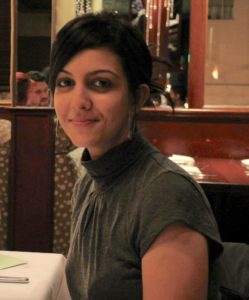
Nina takes an interdisciplinary approach to clinical research to address the real-world complexities of health systems and access barriers faced by underserved populations. Previous projects include identifying individual-level predictors of patient engagement with mobile health (mHealth) interventions, and exploring the role of primary medical care in mental health service utilization. Nina’s prior work includes creating public health programs targeting culture-sensitive behavior change in underserved populations. She also developed patient care strategies for U.S. health systems as a strategy consultant. Nina received her B.A. in Psychology from the University of California, Berkeley and her M.B.A. from the University of Chicago. She is an avid food lover and power napper.
Representative papers
Jhaveri, K., Cohen, J.A., Barulich, M., Levin, A.O., Goyal, N., Loveday, T., Chesney, M.A., Shumay, D.M. (2020) “Soup cans, brooms, and Zoom:” Rapid conversion of a cancer survivorship program to telehealth during COVID‐19. Psycho‐Oncology, 29: 1424– 1426. VIEW
Mason, A.E., Jhaveri, K., Schleicher, S., Almeida, C., Hartman, A., Wackerly, A., Alba, D., Koliwad, D., Epel, E., Aschbacher, K. (2019). Sweet cognition: The differential effects of glucose consumption on attentional food bias in individuals of lean and obese status. Physiology & Behavior, 206, 264-273.
Mason, A. E., Jhaveri, K., Cohn, M., & Brewer, J. A. (2018). Testing a mobile mindful eating intervention targeting craving-related eating: Feasibility and proof of concept. Journal of Behavioral Medicine, 41(2), 160–173. VIEW
Sayegh, C.S., Huey, S.J., Jr., Zara, E.J., & Jhaveri, K. (2017). Follow-up treatment effects of contingency management and motivational interviewing on substance use: A meta-analysis. Psychology of Addictive Behaviors, 31(4), 403-414.
Eduardo Jones


Since August 2022, Eduardo has been in full-time private practice on the Big Island (Sacred Life Wellness LLC). He provides psychotherapy for adolescents and adults across most mental health concerns. He is one of only a couple in-person providers in the community, which is federally designated as a rural location. Dr. Jones enjoys serving a culturally diverse clientele, and appreciates how well his training at USC prepared him for this work. Professionally, he is a member of the Hawaii Island Psychological Association (HIPA), a local organization of mental health providers on the Big Island, and he participates in trainings and collaborations through that group. With so many challenges in today’s world, he is truly grateful to be in this profession and to support others through the difficulties of daily life. Outside of work, he has three young children, Peace, Soul, and Wild, who keep him very busy (see attached photos). Private practice gives him the flexibility to be actively involved in his children’s lives and to support their childcare needs throughout the week.
Representative papers
Jones, E., Huey, S.J., Jr. (2020). Affirmation and majority students: Does affirmation impair academic performance in White males. Basic and Applied Social Psychology, 42(3), 176-191. VIEW
Jones, E., Huey, S.J., Jr., & Rubenson, M. (2018). Cultural competence in therapy with African Americans. In C.L. Frisby & W. O’Donohue (Eds.) Cultural competence in applied psychology: Theory, science, practice, & evaluation (pp.557-573). Cham, Switzerland: Springer.VIEW
Huey, S.J., Jr., Tilley, J.L., Jones, E.O., & Smith, C.A. (2014). The contribution of cultural competence to evidence-based care for ethnically diverse populations. Annual Review of Clinical Psychology, 10, 305-338. VIEW
Gabrielle Lewine
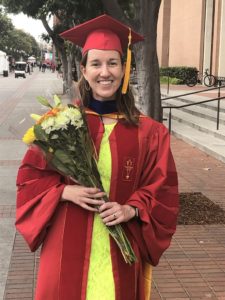 Gabby graduated with her PhD in Clinical Science from USC in 2019. She is currently completing her postdoctoral fellowship at the VA Los Angeles Ambulatory Care Center, with a focus in primary care-mental health integration (PC-MHI) and substance use disorders. Starting in September 2020, she will be working full-time as a staff psychologist in PC-MHI at the VA Sepulveda Ambulatory Care Center, where she also completed her clinical internship. Gabby’s research interests include cognitive dissonance-based interventions and sexism; her clinical interests include PC-MHI, substance use disorders, and couple therapy.
Representative papers
Grigorenko, E. L., Bick, J., Campbell, D., Lewine, G., Abrams, J., Nguyen, V., & Chang, J. T. (2016). The Triology of GxE: Conceptualization, operationalization, and application. In D. Cicchetti (Ed.), Developmental Psychopathology (3rd ed.). VIEW
Huey, S.J., Jr., Lewine, G., & Rubenson, M. (2016). A brief review and meta-analysis of gang intervention trials. In C.L. Maxson & F. Esbensen (Eds.) Gang transitions and transformations in an international context (pp. 217-233). New York: Springer. VIEW
Miriam Rubenson

Miriam Rubenson received her Ph.D. in clinical science from USC in 2021. She completed her clinical internship at Didi Hirsch Mental Health Services child/family track and postdoctoral fellowship at Seattle Children’s Hospital in the Dialectical Behavior Therapy and adolescent partial hospitalization programs. She is currently an assistant professor at the University of Washington in the School of Medicine, department of Psychiatry and Behavioral Sciences. Her work focuses on adolescent suicidality and self-harm, and increasing access to free and low-cost mental health services.
Representative papers
Rubenson, M. P., Gurtovenko, K., Simmons, S. W., & Thompson, A. D. (2024). Systematic review: patient outcomes in transdiagnostic adolescent partial hospitalization programs. Journal of the American Academy of Child & Adolescent Psychiatry, 63(2), 136-153.
Rubenson, M. P., Galbraith, K., Shin, O., Beam, C. R., & Huey, S. J., Jr. (2021). When helping hurts? Toward a nuanced interpretation of adverse effects in gang-focused interventions. Clinical Psychology: Science and Practice, 28(1), 29–39. VIEW
Rubenson, M., Galbraith, K., & Huey, S.J., Jr. (2020). Understanding adverse effects in gang-focused interventions: A critical review. In F. Weerman & C. Melde (Eds). Gangs in the era of internet and social media (pp. 271-290). New York, NY: Springer.VIEW
Cheung, P., Rubenson, M., & Barner, D. (2017). To infinity and beyond: Children generalize the successor function to all possible numbers years after learning to count. Cognitive Psychology, 92, 22-36. VIEW
Jones, E., Huey, S.J., Jr., & Rubenson, M. (2018). Cultural competence in therapy with African Americans. In C.L. Frisby & W. O’Donohue (Eds.) Cultural competence in applied psychology: Theory, science, practice, & evaluation (pp.557-573). Cham, Switzerland: Springer. VIEW
Huey, S.J., Jr., Lewine, G., & Rubenson, M. (2016). A brief review and meta-analysis of gang intervention trials. In C.L. Maxson & F. Esbensen (Eds.) Gang transitions and transformations in an international context (pp. 217-233). New York: Springer. VIEW
Caitlin Smith Sayegh
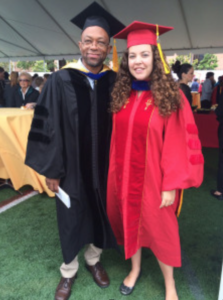
Caitlin Sayegh is an Assistant Professor of Clinical Pediatrics at the USC Keck School of Medicine and a licensed clinical psychologist in the Division of Adolescent and Young Adult Medicine at Children’s Hospital Los Angeles. She earned her PhD in Clinical Science from the University of Southern California in 2015. Dr. Sayegh’s research focuses on developing and evaluating digital health interventions to promote self-management, treatment adherence, and successful transitions to adulthood among adolescents with chronic health conditions. Her current NIH/NICHD K23 award supports training and research in human-centered design/human factors engineering, optimization trial designs, and implementation science to improve the effectiveness and scalability of behavioral health interventions. In addition to her research activities, Dr. Sayegh serves as the psychology and research faculty member for the CHLA Leadership Education in Adolescent Health (LEAH) Program. She also conducts psychotherapy, psychological assessment, and clinical supervision through a contract with the Los Angeles County Department of Mental Health.
Representative papers
Sayegh, C., Ong, E., Gebeyehu, S., Dews, A., Boyle, A., Marino, G., … & Hsu, Z. (2025). Contemporary social media interventions for adolescents with chronic health conditions: A systematic scoping review. Journal of Adolescent Health.
Sayegh, C. S., Iverson, E., MacDonell, K. K., Wu, S., & Belzer, M. (2024). Youth perspectives on mobile health adherence interventions: A qualitative study guided by the supportive accountability model. Patient education and counseling, 119, 108079.
Carrera Diaz, K., Yau, J., Iverson, E., Cuevas, R., Porter, C., Morales, L., … & Sayegh, C. S. (2025). Human-centered design approach to building a transition readiness mHealth intervention for early adolescents. Journal of Pediatric Psychology, 50(1), 106-114.
Sayegh, C.S., Hall-Clark, B., McDaniel, D.D., Halliday-Boykins, C.A., Cunningham, P.B., & Huey, S.J., Jr. (2019). A preliminary investigation of ethnic differences in resistance in Multisystemic Therapy. Journal of Clinical Child and Adolescent Psychology, 48(supposed. 1), S13-S23. VIEW
Sayegh, C.S., Szmuszkovicz, J.R., Menteer, J., Sherer, S., Thomas, D., Lestz, R., & Belzer, M. (2018). Cell phone support to improve medication adherence among solid organ transplant recipients. Pediatric Transplantation, 22(6). https:/doi.org/10.1111/petr.13235. VIEW
Sayegh, C.S., MacDonell, K.K., Clark, L.F., Dowshen, N.L., Naar, S., Olson-Kennedy, J., … Belzer, M. (2018). The impact of cell phone support on psychosocial outcomes for youth living with HIV non adherent to antiretroviral therapy. AIDS and Behavior, 22(10), 3357-3362. doi: 10.1007/s10461-018-2192-4. VIEW
Jacqueline Lee Tilley
 Jacqueline graduated with a Ph.D. in Psychology (Clinical Science) in 2019 and is currently a research fellow at the Institute of Policy Studies, Lee Kuan Yew School of Public Policy, National University of Singapore. Jacqueline is broadly interested in understanding how sociocultural factors impact the development of mental health problems and its treatment. When she is not working, Jackie engages in pro-level juggling of her other commitments in life: motherhood and marriage.
Representative papers
Tilley, J.L., Huey, S.J., Jr., Farver, J.M., Lai, M.H.C., Wang, C.X. (2021). The immigrant paradox in the problem behaviors of youth in the United States: A meta-analysis. Child Development, 92(2), 502-516.VIEW
Tilley, J.L., Farver, J., & Huey, S.J., Jr. (2020). Culture, causal attribution, and coping in ethnic Chinese college students in the United States. Asian American Journal of Psychology, 11(2), 79-87. VIEW
Huey, S.J., Jr., & Tilley, J.L. (2018). Effects of mental health interventions with Asian Americans: A review and meta-analysis. Journal of Consulting & Clinical Psychology, 86(11), 915-930. VIEW
Huey, S.J., Jr., Tilley, J.L., Jones, E.O., Smith, C.A. (2014). The contribution of cultural competence to evidence-based care for ethnically diverse populations. Annual Review of Clinical Psychology, 10, 305-338. VIEW
Sylvanna M. Vargas

Sylvanna M. Vargas, PhD, MPH is a former doctoral student in Dr. Huey’s lab. She is currently an NIMH T32 Postdoctoral Fellow in Child Mental Health and Intervention at the UCLA Semel Institute. At UCLA, she is mentored by Dr. Anna Lau and Drs. Joan Asarnow and Jeanne Miranda. Sylvanna received her PhD and a Master of Public Health from USC in 2021, after completing her predoctoral psychology internship at the West LA VA Medical Center. She received her BA from McGill University in 2011. During her PhD, she was co-mentored by Drs. Stanley Huey at USC and Jeanne Miranda at UCLA. Her graduate research examined sociocultural risk and resilience factors related to mood disorders and suicidality among high-risk, vulnerable populations. During her postdoc, she is receiving training in dissemination and implementation science with a focus on interventions that reduce disparities in suicide among youth of color and sexual and gender minority youth. She has been awarded the 2021 Ford Foundation Postdoctoral Fellowship, the 2017 Foundation Predoctoral Fellowship, and the American Psychological Foundation/ Council of Graduate Departments of Psychology Ruth G. and Joseph D. Matarazzo Scholarship. Sylvanna was born in Honduras and is of Nicaraguan descent. She grew up moving around several countries, including spending much of her childhood in Costa Rica and Miami.
Representative papers
Vargas, S.M., Wang, C., Jafarzadeh, N., Rubenson, M., & Huey, Jr., S. J. (in press). Depression, perceived burdensomeness, thwarted belongingness, and suicide risk trajectories among emerging adults during the early COVID-19 pandemic. Journal of Social and Clinical Psychology.
Vargas, S. M., Calderon, V., Beam, C. R., Cespedes-Knadle, Y., N., & Huey, S. J., Jr. (2021). Worse for girls?: Gender differences in discrimination as a predictor of suicide risk among Latinx youth. Journal of Adolescence, 88, 162-171. VIEW
Vargas, S.M., Huey, S.J., Jr., & Miranda, J. (2020). A critical review of current evidence on multiple types of discrimination and mental health. American Journal of Orthopsychiatry, 90(3), 374-390. VIEW
Vargas, S.M., Dere, J., Garcia, L., & Ryder, A. G. (2019). The role of cultural values in the Folk Psychiatry explanatory framework: A comparison of Chinese- and Euro-Canadians. Journal of Cross-Cultural Psychology. VIEW
Doucerain, M., Vargas, S., & Ryder, A. G. (2016). Mixed-methods research: Integrating qualitative and quantitative approaches to the psychological study of culture. In N. Zane, G. Bernal, & F. Leong (Eds.), Culturally-informed evidence-based practice for ethnic minorities: Challenges and solutions. Washington, DC: American Psychological Association. VIEW
Vargas, S. M., Cabassa, L. J., Nicasio, A., De La Cruz, A. A., Jackson, E., Rosario, M., … & Lewis-Fernández, R. (2015). Toward a cultural adaptation of pharmacotherapy: Latino views of depression and antidepressant therapy. Transcultural Psychiatry, 52(2), 244-273. VIEW
Crystal Wang
 Crystal was a clinical psychology Ph.D. student. She received her B.A. from U.C. Berkeley in 2015, where she conducted a study assessing the impact of language on implicit attitudes towards Asian Americans. At USC, she ran several studies investigating the effects of ethnicity and culture on mental health stigma for her master’s thesis. This transitioned to her dissertation project, where she is currently testing a novel, culturally-relevant social norms intervention for mental health stigma and help-seeking with depressed Asian and European American college students. Previous projects include examining the effects of threat on racial bias and xenophobia, and how social context influences engagement in problem behaviors. Outside of research, Crystal enjoys traveling, making trips up north to visit her family, and drinking trenta-sized americanos to stay awake.
Representative papers
Huey, S.J., Jr., Park, A.L., Galan, C., & Wang, C.X. (2023). Culturally-responsive cognitive behavioral therapy for ethnically diverse populations. Annual Review of Clinical Psychology, 19(1), 51-78. VIEW
Wang, C.X., Huey, S.J., Jr., & Pan, D. (2021). Therapeutic alliance mediates the effect of directive treatment on subsyndromal depression for Asian and European American students. Journal of Psychotherapy Integration, 31(3), 291-301. VIEW
Tilley, J.L., Huey, S.J., Jr., Farver, J.M., Lai, M.H.C., Wang, C.X. (2021). The immigrant paradox in the problem behaviors of youth in the United States: A meta-analysis. Child Development, 92(2), 502-516. VIEW